Categories
Parents Tips

Delaying Tactics for Cultivating Children’s Patience

truthbaptist

Written by: Pang Chi Wah, Registered Educational Psychologist, New Horizons Development Centre

Hong Kong is a society abundant in material wealth, but due to the overabundance of resources, when children have needs in life, parents quickly provide them with ample supply, allowing them continuous satisfaction. However, parents satisfying their children’s needs too quickly can have a negative impact on them, failing to cultivate their ability to endure, and over time, their patience may become limited.

Utilizing Emotional Intelligence to Cultivate Children’s Patience

Delaying gratification or the fulfillment of life’s needs is an important part of developing emotional intelligence (EQ). If parents are accustomed to quickly satisfying their children’s needs but then complain about their lack of patience, such criticism is unfair to the children, as their patience has simply not been nurtured.

How can one delay the fulfillment of children’s needs? To train children’s emotional intelligence, the secret is “neither using the cane nor the carrot,” meaning that neither corporal punishment nor frequent rewards are necessary. Instead, patience and the ability to wait are cultivated through daily life experiences. Parents can try the following examples:

Example 1: When parents and children go to a dim sum restaurant, there is no need to let the children eat whatever they like immediately. Parents can ask the children to wait for 5 minutes after finishing one basket of dim sum before eating a second type; or they can require the children to wait until the parents have eaten a portion before they can eat. In this way, parents and children take turns eating the dim sum.

Example 2: When children ask their parents to buy toys, parents do not need to purchase them immediately. They can explain to the child to wait a few hours, days, or a week before buying, asking the children to wait patiently.

Example 3: When children return home from the street, do not let them turn on the TV immediately as they please. They must be asked to put away their shoes and socks, drink a glass of water, and sit on the sofa for 3 minutes before they can turn on the TV.

Example 4: When children go out with their parents, do not let them rush to press the elevator button immediately. Parents can ask them to wait for the parents to go out together, walk to the elevator together, and then press the button.

Parents Must Be Consistent and Credible to Train Children’s Intelligence

These are just a few examples. Parents must make good use of the “dragging tactic” in life’s details. Using the dragging tactic does not mean denying or refusing the children’s needs, but rather not satisfying them immediately. What parents need to pay attention to is that when using these tactics, they must follow through with what they say. No matter if the children act spoiled, throw a tantrum, cry, or scream, parents must stick to the principle of “dragging”; additionally, parents must also be credible and do what they have promised the children.

Furthermore, when children make requests, parents can ask the children to explain their reasons, which not only trains their emotional intelligence (EQ) but also their intelligence (IQ). By putting a little more effort into the details of children’s lives, parents can effectively help train their children’s emotional intelligence. Parents might as well give it a try!

Categories
News

Dough Figurine Workshop

Categories
News

Exploring replica artifacts to understand Chinese history

Categories
News

Secrets of Chinese Medicine

Categories
News

Chinese Cultural Arts Performance

Categories
News

Chinese Culture Parent-Child Experiential Workshop

Categories
News

Chinese Culture Experience Day

Categories
News

Traditional Chinese Festivals

Categories
Parents Tips

Playing and toys

truthbaptist

Shirley LooPlaying and toys

Child, in my memory, you rarely asked me to buy toys during your childhood. I wonder if this has anything to do with that time when I took you away from home to “Fun World.”

Do you still remember standing in front of that plush toy? I made up many stories, saying that Ning Ning wanted to take them home, and they cried, saying “they didn’t want to leave their own home.” As a result, you believed it to be true and your heart softened, and you no longer pleaded with me to buy the plush toys. But it also let us know that plush toys were your favorite, so whenever we went on business trips, we would buy one to bring back for you as a souvenir. Do you still remember Dutchess, the cute brown pony?

Aside from plush toys, my memories related to toys are quite vague. I only remember singing games around the dining table after meals, playing with paper balls when you were recovering from a fever, and building sandcastles with you on the beach and catching crabs by the rocks, none of which involved spending money on toys.

I also remember setting a rule back then: no video games at home. You begged many times, asking why we couldn’t buy an X Paradise to play at home, and my response was: “Once a week at your cousin’s house is enough!” I wonder if this kind of “persistence” made you feel uncomfortable. I hope you understand the good intentions of your mother, which was not wanting your thoughts and attention to be captured by video games. Seeing you recently bought a video game console with your husband and are enjoying it at home, you’ve finally found someone to play with, haven’t you?

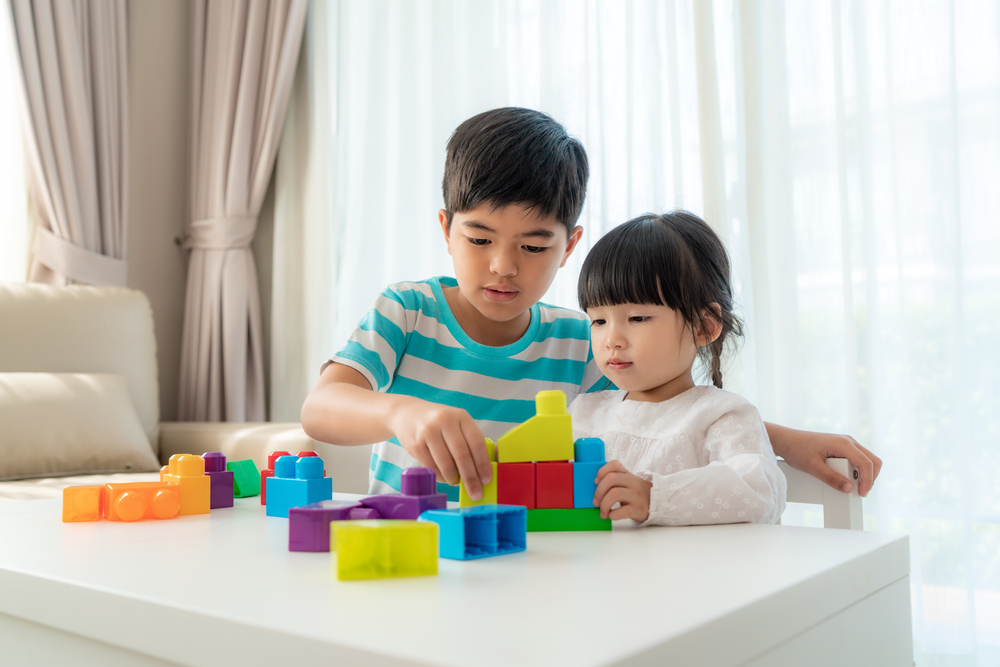
Recently, your father and I browsed through a toy store for a while, seeing a dazzling array of toys for adults, children, and babies. But we still firmly believe that no matter how fun toys are, they cannot replace the time parents spend playing with their children. After all, toys are not meant to “pass the time” for children, but are tools for creating happy moments between parents and children!

Ho YingToys

When I was young and went shopping with you, I would always see children crying and screaming at the entrance of toy stores, clamoring to buy toys. However, this situation rarely happened to me, not only because I had a deep affection for every toy but also because I had you to play with me, making every day feel new even if I was looking at the same toys. The stuffed toys at home would not only perform in stage plays but also interact with the “audience” (which was me), and they would go shopping with me and chat with “friends” on the street or in the stores.

The only toy I really wanted but never got was a video game console. Every weekend when I visited my cousin, he would always play different games with me, like basketball, ones set in the Warring States period, and racing games, which made me want to own one so I could play at home. But you would always say, “It’s good enough to play with your cousin; we don’t need to own one.” Honestly, I really hoped that one day, when you came home from work, you would bring home a box of X Paradise, but that never happened.

Now that I’ve grown up, my husband and I finally bought one to take home. At first, I was very excited, thinking that I could play as soon as I got home. However, there were a few times when I was alone at home, I would play the video game for ten minutes and then do something else. It was then that I realized that what I enjoyed about playing was not the game itself, but having someone to play with. So, what’s important is not the toy, but the interaction with family and friends.

Children of today’s generation seem to only play games on mobile apps, and toys have gradually lost their status. Whether in restaurants or on the subway, the laughter of children is less heard, replaced by people of all ages looking down at their phones, the adults reading the news and the children playing video games. Most mobile games are single-player, merely interacting with a pre-programmed system, lacking the exchange between people. If possible, why not put down the phone, take out a stuffed animal or a robot, and bring the child back to that world full of fantasy and innocence!

Categories
Parents Tips

Emotional Language for Parents and Children

truthbaptist

Written by : Family Dynamics Child Play Therapist

                 Marriage and Family Therapist, Ms. Lee Wai Zi

Growing up, we are seldom taught to express our emotions verbally. Schools and society focus on nurturing children’s cognitive, analytical, and problem-solving skills, so we are used to discussing things and opinions, and rarely express our emotions directly in words. Even when families communicate and talk to each other, we are not used to sharing our feelings.

Some parents may ask, “Isn’t it enough for me to express my care for my child through actions (such as hugging or kissing him/her)? Is it necessary for parents to verbally affirm and respond to their children’s feelings and needs?

While it is important for parents to express their love for their children through actions, it is also important for parents to respond empathetically to their children so that they can understand and accept their thoughts and feelings in a more concrete and tangible way. This not only strengthens the parent-child relationship and builds the child’s sense of security, but the child also learns how to verbally express his or her feelings and needs, which helps reduce the need for the child to express his or her inner turmoil through bad behavior.

In fact, the language of emotion is not the language we are used to. Many parents are concerned that affirming and empathizing with their children’s negative emotions may condone and exacerbate their children’s bad behavior. For example, when a child feels sad about the loss of a beloved object, parents are afraid that rehashing the incident will touch on the child’s sad feelings. Parents may say to their children, “It’s okay, just play with something else! or “Try to see if you can buy another one instead. Parents want to calm their children by solving their problems.

However, not only do children fail to learn from their parents’ responses how to access and understand their own feelings and effectively regulate their negative emotions, they also have no opportunity to learn from their failures and develop a sense of responsibility.

If parents can put themselves in their children’s shoes, understand their experiences from their children’s perspective, and try to tell them how they feel, even if it is as simple as “I think you must be very sad and upset about losing your beloved object. This is the most powerful support and comfort for children, giving them the confidence and courage to face the challenges of life.